Why NC Soft and Baemin Are Building Media
The boundaries are dissolving. Red Bull proved the formula. Now Korean companies like NC Soft and Baemin are following. What does it mean when companies become media?
The Boundaries Are Dissolving
Let's talk about something most people already know. You might occasionally drink Red Bull. You can find it at any convenience store. I'll grab one sometimes on long drives. (In Korea there are substitutes — Bacchus being the classic, and Hotgx targeting the same niche.) Honestly, Red Bull tastes bad and costs too much. And yet at some point you find yourself placing it on the counter. Red Bull knows its own drink is bad and expensive too. As a joke, they say "we accidentally got into the energy drink business."
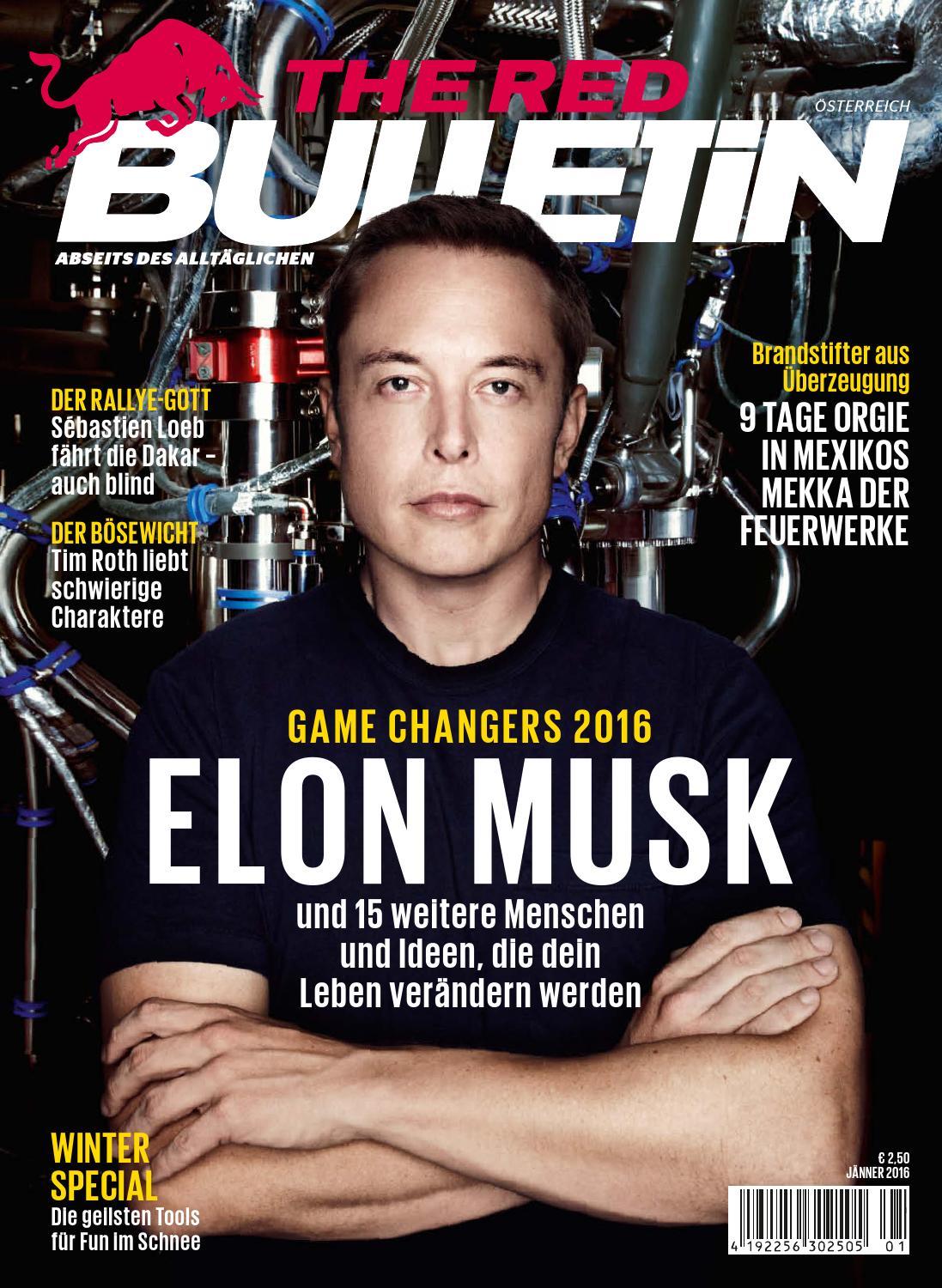 Working on a space-related story lately, so a shot of Elon Musk...
In 2005, Red Bull was a Formula 1 sponsor. At the time, they brought a large printing press to the race venue and distributed results on the spot right after each race — like the betting slips handed out at horse races. Two years later they decided to create a men's lifestyle magazine centered on their concept of "extreme," and began publishing the Red Bulletin.
The magazine, conceived as "thrilling stories about the three great interests of readers who pursue dynamic lives — sports, culture, and lifestyle" — prints over 2 million copies monthly, with 550,000 paying subscribers.
They established a subsidiary called Red Bull Media House and began producing a torrent of content. Red Bull's strategy was to focus on hosting events worth going wild for and producing content worth consuming.
The landmark example is the 2012 space dive event. Austrian skydiver Felix Baumgartner jumped from 39,000 meters above the Earth in a space suit — the world's first supersonic freefall with the naked body (https://youtu.be/Oxc-hhQldBE). Eight million people watched simultaneously. Red Bull invested 74 billion KRW for the event; the advertising value it generated was 47 trillion KRW.
The Red Bull Paper Wings paper airplane competition, held every three years, drew 46,000 participants from 80 countries at the last event. (The 2018 competition was underway at the time of writing; Korean qualifiers were held in April at Sungkyunkwan University.) There's also a kick fighting competition called Red Bull Kick It, skateboarding, cliff diving, and many more events.
Soccer player Hwang Hee-chan, who played well in the World Cup, is also connected to Red Bull — he was on the roster at Red Bull Salzburg in Austria. Something about the bull imagery suited him.
Red Bull spends more than two-thirds of its marketing budget on content production and similar activities. Their online videos are not only strong — their view counts are overwhelmingly first among all companies worldwide. Their count is more than double that of Samsung, which sits in second place. (Samsung being second — I didn't know that either.) Red Bull's brand value stands at $7.9 billion. They sell thousands of videos, images, and music licenses. In sports imagery, no company rivals Red Bull except ESPN. Film, documentary, TV — there is no limit to what Red Bull covers.
This is getting boring, so let's leave the Red Bull story here.
Companies producing magazines and content is nothing new. KTX trains have their own magazine; airlines have in-flight magazines. Of course, plenty of people have picked one up to pass the time. But has anyone ever thought: "Wow, this is incredible! I have to subscribe to this"? The basic strategy is the same — so why the difference in results?
Is it just the amount of money poured in?
# Quality, Original Content, and Capability
It's less familiar in Korea, but General Electric, LEGO, IBM, P&G, and Coca-Cola produce content that surpasses what most dedicated media companies create. (Saying the competition for newspapers is no longer other newspapers is old news; saying it's Naver or portals is already yesterday's story. Now the competition is simply any company with genuine expertise.)
Take Nike as an example. In 2006, Nike built brand apps NTC (Nike Training Club) and NRC (Nike Run Club) for mobile devices, helping people who exercise track their own performance. (Is this not content? Think carefully — of course it is.)

Close to 30 million people use these apps, and Nike takes their stories to create narratives, gather information, and build better products. This creates powerful brand loyalty that converts into revenue. Rather than short-term consumption followed by disengagement, it builds a fan base for NIKE and keeps them together for the long term.
After 2020, the difference between the media business model and the product brand business model will disappear. Media companies will generate revenue from products and services simultaneously with traditional media offerings. Product and service companies will do the same in return. — Killing Marketing, p.99
# So What Should We Do?
There are clues.
Until a few years ago, I thought the most important thing for success in media was content — but that turned out to be wrong. As a media manager, rather than being constrained by how content is delivered and focusing only on that, you need to focus on building an excellent community with remarkable content. — Killing Marketing, p.115
From the media side, there is no tangible "product." The intangible stories and narratives exist, but there's nothing you can hold in your hand. However, building a community is possible. In the Korean media market, multiple startups that have recently attracted attention are centered on community. Is what Yeohaengui Michida (Crazy About Travel) produces content, or a product for its community? What is Trevarri's narrative grounded in?
Of course, making content with community as the foundation is different from making community or fans with content as the foundation. But the core is still: build a loyal audience through valuable content experiences. (To do that, you need to focus vertically on a specific domain and provide genuine experiences that create passion and engagement.)
"Marketing is always necessary — but in the digital age, the method has to change. Even if you successfully deliver information to as many people as possible, consumers quickly lose interest and leave, because new information pours in constantly. To make consumers into 'your side' in this world, you need a more reliable 'carrot.' The exciting network that takes place in a user community is a powerful magnet for keeping consumers close." — Professor Bharat Anand, Harvard Business School (HBX)
Arrow Electronics, for example, is an electronics company. It used to be a product manufacturer, but it focused on what problems its buyers — electrical engineers — were facing. Those engineers were always interested in cutting-edge technology, eager to learn. Arrow Electronics decided to become the media that serves them. They acquired and consolidated several sites popular among electrical engineers, built Arrow.com, and created original content. Reader engagement exploded. Arrow became the largest media asset in the industry, owning 51 electronics-related media properties. (Though I went to Arrow.com once and couldn't last a minute...) Through this, Arrow Electronics can lead their audience's interests and use their information to create optimized products, while Aspen Core generates significant revenue through web advertising, sponsorships, custom content production, magazines, and data sales.
What is the hint here? It is: provide practical experiences through a narrowly focused vertical audience.
Let's try a realistic thought experiment. Not long ago, we made content called a Beer Ideal Type World Cup (http://news.joins.com/DigitalSpecial/301) — simple and intuitive content. (Somewhat disappointed it didn't get more attention... ugh.) Let me add some imagination. There's a currently(?) hot craft brewery culture. It's been trending in New York and similar cities for years, and has taken root considerably in Korea too. The most well-known here is probably Amazing Brewery (Seongsu-dong flagship). What if Amazing Brewery created original content? (Magazines, webzines, TV — the possibilities are endless.) And what if they planned events that at first glance seemed unrelated to beer?
 Amazing Brewery
If it were me, I'd try a surfing + craft brewery event in Yangyang in the summer. In fact, Amazing Brewing Company states its mission as "working to spread the taste of beer to the people of this country who have been drinking for decades simply to get drunk." The flagship in Seongsu-dong embraces the meaning of "holy water" inherent in its neighborhood's name, and actually runs a craft beer academy. It's creating stories.
Adding to the examples above: if you kept creating original content with the concept of "all craft beers lead here," gathered readers, and collected information — couldn't you truly lead a craft brewery culture beyond the big brands like Cass, Hite, and whatever else? (Interestingly, JoongAng Biz already held a first-class craft beer startup academy last year and was running the second round. Of course, the promotional approach was completely joyless — feels like an old people's class...)
If loyalty in products shows up as purchases (think the devoted Apple fan), then loyalty in content shows up as repeat experience or subscription. In Korea, subscription culture hasn't taken strong root due to the flood of content and a lack of niche approaches, but with things like Monthly Yoon Jong-shin, subscription culture in niche markets is slowly finding its footing. (Let's come back to this next time.)
# Back to the First Question
NC Soft built media. They invested 22 billion KRW in the visual effects company behind films like Okja, The Handmaiden, Snowpiercer, and Oldboy; began joint AI media research with Yonhap News; started amplifying baseball information service PAIGE; and began building up their webtoon platform. I heard they've been recruiting journalists too.
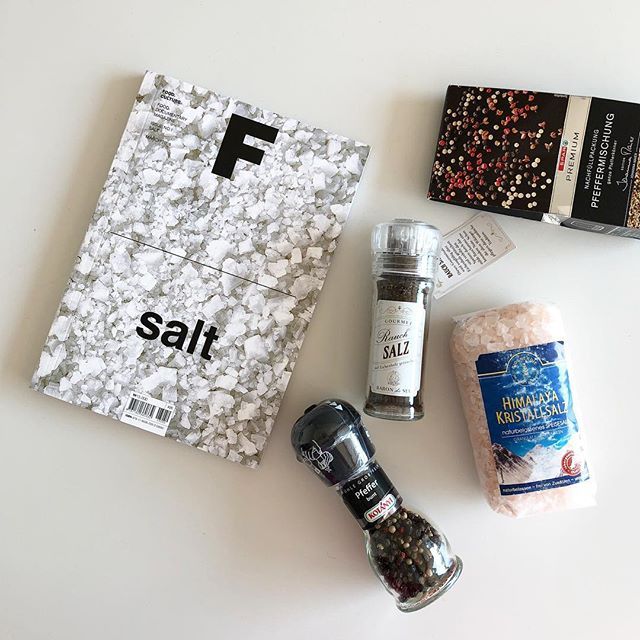
Baemin launched Magazine F, a specialist food magazine. Not the usual "Baemin is hip, Baemin has a unique corporate culture" story — just stories about food and people. It was created in collaboration with Cho Su-yong of JOH (Kakao co-CEO), maker of the celebrated Magazine B, which is why it's called Magazine F. The debut issue was Salt — a documentary-style deep dive into a single ingredient. Issue two was Cheese.
Baemin and NC Soft differ in approach and direction. But what they're pursuing is the same: original content — content narrow enough to form genuine fans, not just customers — approached in a media-minded way. And approached with great care, accompanied by compelling events.
I can't claim to fully understand marketing strategy, and I don't claim to deeply understand media innovation.
But thinking from the perspective of a reader or consumer — I genuinely don't have a lot of content I want to write about, watch, save, clip, and come back to. There is no "media" I feel like being a fan of.
In a world where companies are becoming media, what can we do?
Right. Enough procrastinating. Time to get back to work.