The End of Print May Never Come... The Golden Age of Small Magazines
I thought the age of paper was over. But I was half wrong. Independent magazines with strong editorial identities are quietly flourishing.
The End of Print May Never Come... The Golden Age of Small Magazines
photo by annotator
I thought the age of paper was over.
Nostalgia for physical, tactile objects might be keeping print books on life support, I thought — but their death sentence was only a matter of time.
I believed print books would survive as a niche indulgence for a small number of snobs, a way to display refined taste.
As of 2021, the average number of books read per person per year stood at 4.5 — roughly half of the 7.5 books recorded in 2019. Only 47.5% of Koreans (as of 2020) read more than one book per year.
Photo: Benjamin Dada on Unsplash
Just as the invention of paper and printing caused an explosion of knowledge, I thought the emergence of the internet and smartphones — a new kind of parchment — made the decline of print an unstoppable force of nature.
But I was wrong. Or rather, only half right.
The Failure of E-books and the Success of Trevarri
Many people thought the same way I did, and some went into the e-book business. Amazon, the maker of the Kindle, was the flagship player, while Korea had companies like Kyobo Books and Ridi.
The results are well known. Nobody carries an e-reader today.
Someone might mention the iPad as a substitute. But honestly, who would use a tablet capable of streaming video, playing games, drawing, and taking notes just to read books in a conventional way?

Photo: Alessia C_Jpg on Unsplash
In the past, an explosion of knowledge created demand for books, and the hunger for news and information gave rise to the golden age of newspapers. As the era of visual media arrived and television claimed its share, interest in books declined.
Then the smartphone dealt the final blow.
The limited attention of users fragmented into photos, videos, online communities, and social media, leaving less and less room for books.
Going to a bookstore became less of a purchasing act and more of an exploratory experience — a way to express one's cultural sensibility.

Used bookstore — Photo by annotator
As reading itself became a rarity, vertical markets targeting readers began to emerge. The most prominent example is Trevarri, a service that combines book clubs with community. This offline gathering-based service aims to deliver not just knowledge from reading, but also the insights gained through discussion and the exchange of ideas.

Trevarri service
Launched in 2015, the service became quite popular among young people who considered themselves well-read, attracting 4 billion won in investment and accumulating over 50,000 members. It rented an entire 11-story building in Gangnam and formed over 400 book clubs. It was also famous for its club leaders — who included the CEO of Naver, lawyers, novelists, actors, and civil servants. While it hasn't maintained the same competitive edge since COVID-19, it was once a powerful trendsetter that spawned countless imitators in the knowledge community and community-based business space.
To bring things back to paper and print: what this suggests is that the people and community around books have become more important than the books themselves. There was an expectation that books would provide deeper, more structured knowledge — but today, a 10-minute YouTube video, a newsletter, or a podcast episode can sometimes convey just as much. Knowledge and information, which were once ranked with books and articles at the top, have been democratized under the banner of "content." And within that category, there's room for all kinds of additional context — from individual personalities to entire communities.
The Decline of Print Magazines. Smaller Bodies, Wider Topics.
The most interesting part of this story is what's happening with magazines. In their heyday, magazines were an excellent multimedia format. Women Joongang, founded in 1970, once printed 100,000 copies a month. Titles like Samteo, Happiness Is Full, and Women Dong-A were ubiquitous in beauty salons, hospitals, banks, government offices, and cafes — prime advertising real estate for brands.
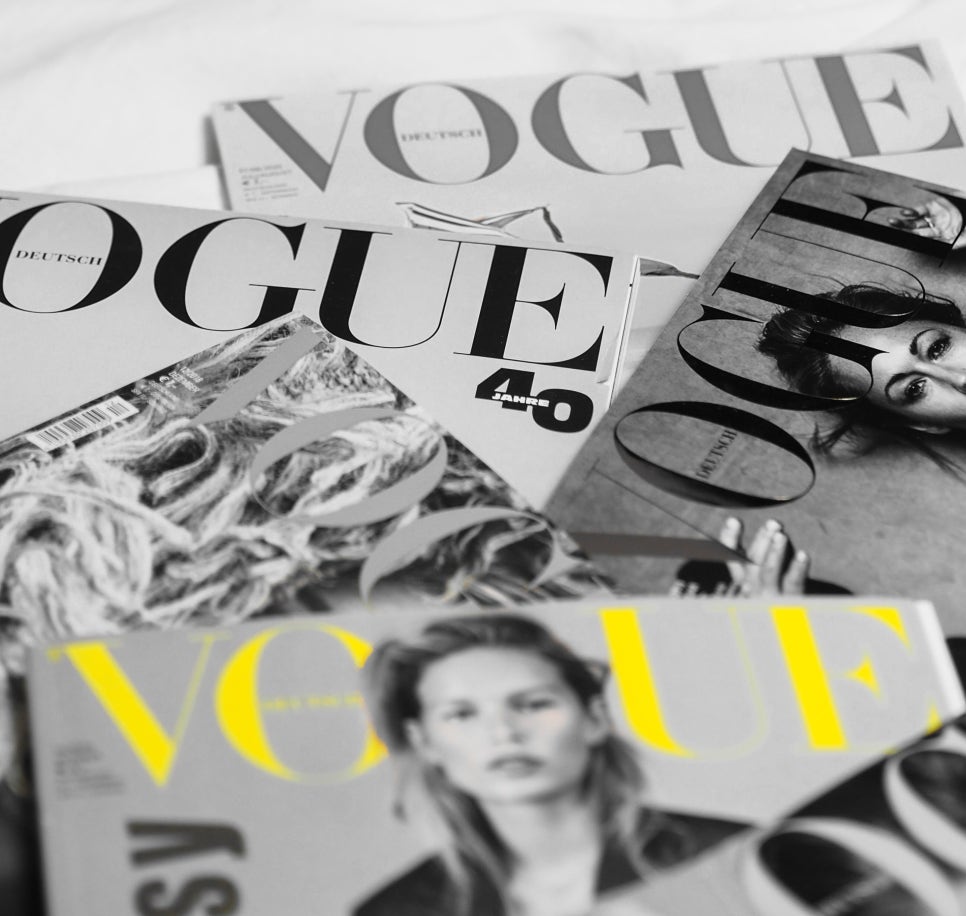
With their vivid imagery and visual flair — somewhere between newspapers and television — magazines perhaps read the currents of the times faster than other media. They were more refined and sensuous, capturing attention in ways books and newspapers couldn't. But they too lost ground to the internet. According to industry statistics, the number of people employed in Korea's magazine sector fell from 18,729 in 2012 to 12,154 in 2017, and then to 6,926 in 2021.
Interestingly, while the workforce shrank, the number of magazine businesses actually increased — from 1,777 in 2019 to 1,788 in 2021. The workforce dropped by over 2,000, yet the number of businesses grew — meaning small-scale magazines were on the rise. By 2021, the average number of employees per magazine company was just 3.9, down from 12 in 2012.
This can be understood as a shift away from large-scale magazines toward a proliferation of small-scale magazines. The market for advertising-heavy glossy publications has all but disappeared. As Jang Eun-soo, director of the Editorial Culture Laboratory, put it:
The era of the "grand magazine" — where dozens of editors and designers worked together on a single issue, subsidized by advertising — has clearly come to an end.
In its place, independent magazines that focus on editorial content and emphasize book-like value have multiplied. Just among the titles I personally enjoy, there are magazines covering brands (Magazine B), urban culture stories (Urban Life, Around, Magazine Brick), and philosophy (New Philosopher) — a diverse range that readers have warmly embraced.
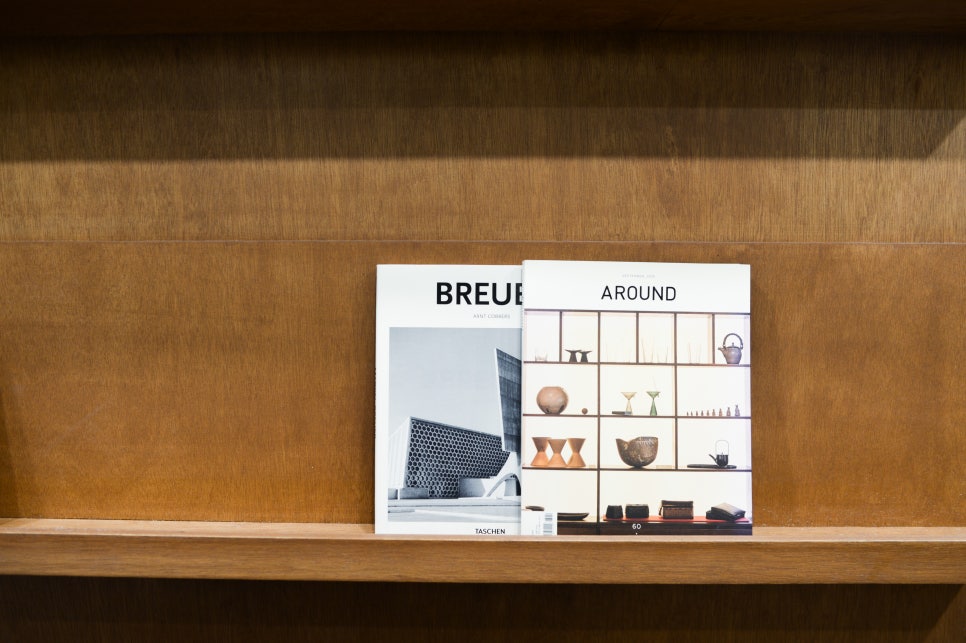
According to the Ministry of Culture, Sports and Tourism's periodic publication registry, the number of magazine titles — which had dropped to 4,931 in 2016 — climbed back to 5,495 by 2021. The age of the High Quality Independent Magazine has arrived. This rise is driven by readers seeking curated, verified knowledge delivered by someone with similar tastes — a desire for trustworthy editorial curation in an age of information overload.
There's also a growing desire to become magazine creators. The number of people writing publicly — through blogs, Kakao Brunch, and similar platforms — has grown significantly, and many have developed skills in photography and video. These writers are comfortable communicating with readers through newsletters and understand the value of creative work. They want their content to actually reach real audiences through the magazine format.
These magazines prize an independent perspective that distinguishes them from mainstream publications and are not heavily reliant on advertisers. They sustain themselves through sales and seek readers who are willing to pay for quality content. Readers who share their values open their wallets readily. Subscriptions are available, and many titles sell through the growing number of independent bookstores. Recently I had a chance to meet Kim Min-seong, who runs a space called "Paper Magazine Club" — dedicated to reading and discussing print magazines. He said magazines are uniquely positioned to connect people with diverse tastes and enable the sharing of refined, high-sensibility experiences.
https://www.wereadmagazine.com/
The Age of Taste — Where Will Magazines Go?

Powell's bookstore in Portland. Packed with people, as always.
A few years ago, I visited Portland on a trip to the United States. It's known as the birthplace of Kinfolk magazine and a mecca for hipsters. Whether or not it lived up to that reputation, I found it to be a calm, intriguing city — a place where people expressed their tastes naturally, without excess.
Today's magazine market seems to operate along similar lines. Many are small-scale operations that go deep into niche subjects. Rather than asking "what's popular?" the question becomes: "what content — and how deep should it go — for readers with clear and specific interests?"
These magazines are closer to books than traditional periodicals, and they often inspire the desire to own them. The role models are clear. In the US, UK, Australia, and Japan, magazines targeting readers with strong, defined tastes — built on the strength of their content — have been growing in popularity for over a decade.
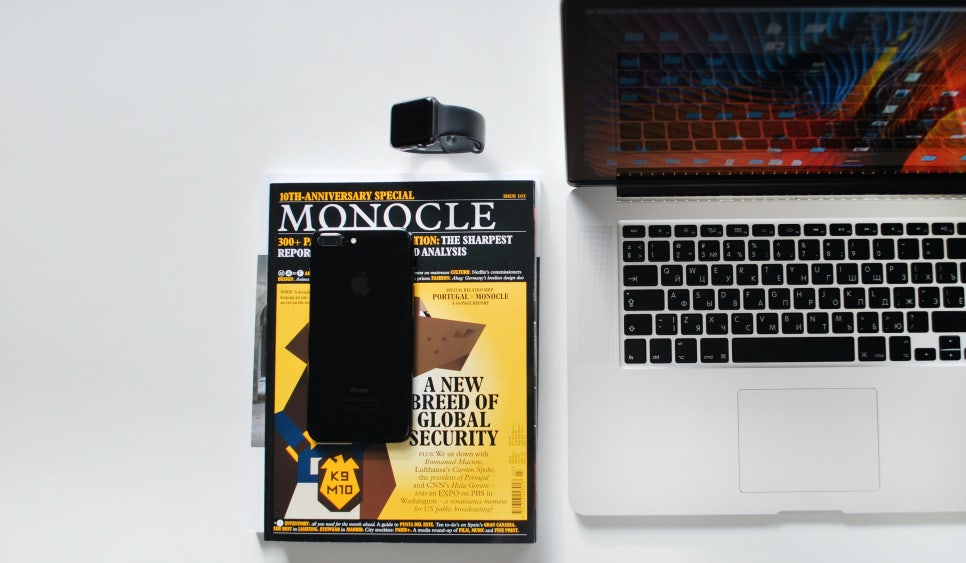
These titles have been growing their circulation by about 7% annually, even amid the broader print magazine crisis. A prime example is Monocle, a business lifestyle magazine founded in 2007. Monocle has grown into a brand in its own right, collaborating with various companies and becoming a new role model for what a magazine can be.
In Korea, several magazines are also forging new paths. Another point worth noting is startups. Recently, startups have begun to take an interest in print magazines. Companies like Baemin (Magazine F) and Zigbang (Directory) have created distinctly focused publications, and Ohouse has produced limited-edition lifestyle magazines. These function almost like merchandise for their fan bases — creating a sense of community rooted in physical objects — while also communicating a brand's coolness and identity.


Directory magazine by Zigbang
I believe magazines will continue to evolve. They may well be the vanguard pushing back against the premise that print is dying.